Why Your Business Needs an E-Waste Management Strategy
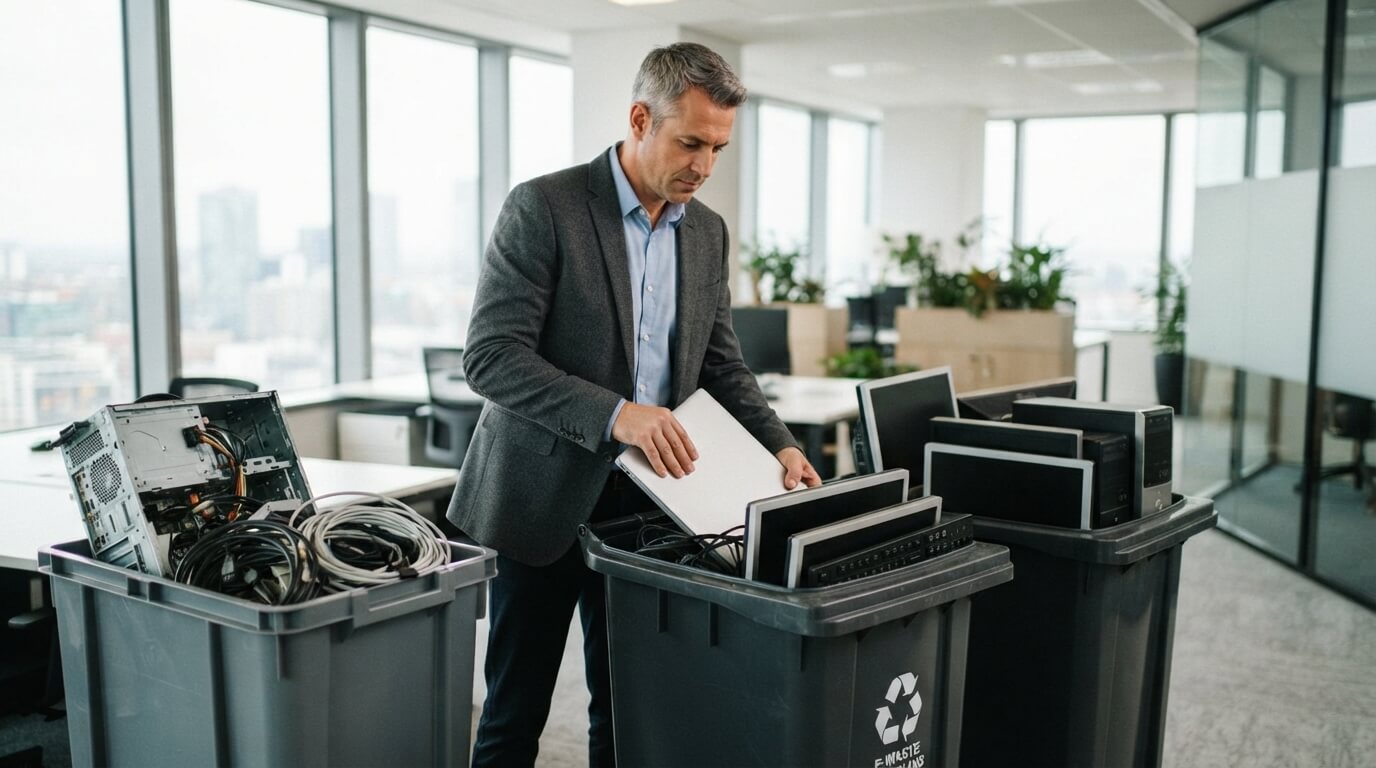
An e-waste management strategy is a documented plan for how an organisation stores, sanitises, reuses and recycles retired electronics. In Western Australia and the Northern Territory, it reduces data breach exposure, supports compliance and recovers asset value.
Key Takeaways
A structured e-waste management strategy protects data, meets state rules and recovers value. These are the essential facts for businesses operating in Western Australia and the Northern Territory.
- Australia generated 511,000 tonnes of e-waste in 2019, projected to reach 657,000 tonnes by 2030.
- WA has banned regulated e-waste from landfill since 1 July 2024.
- In WA, significant entities are businesses with 200 or more employees, or 5 or more tonnes of regulated e-waste a year.
- Under APP 11.2, organisations must destroy or de-identify personal information they no longer need.
- Serious interferences with privacy carry maximum penalties of at least AUD $50 million for companies.
- The NT has no e-waste landfill ban, but waste is regulated under the Waste Management and Pollution Control Act 1998.
What Is an E-Waste Management Strategy?
An e-waste management strategy is a formal policy governing how a business tracks, secures, reuses, recycles and documents electronic equipment. It completes IT asset lifecycle management, replacing ad-hoc clean-outs with a repeatable, auditable process.
What Counts as E-Waste for Australian Businesses?
E-waste is any discarded electrical or electronic equipment. Western Australia defines regulated e-waste in six categories that cover most business equipment, from laptops and screens to batteries and air conditioners.
- Screens, information technology and telecommunications equipment
- Lighting and lamps, including fluorescent tubes and LED products
- Large appliances for home, office or professional use
- Batteries, except embedded batteries
- Temperature exchange equipment, such as air conditioners
- Large medical devices
Why Do Businesses Need a Structured E-Waste Management Strategy?
Businesses need a structured strategy because one retired device carries four risks: data exposure, non-compliance, environmental harm and lost value. A documented process manages all four together rather than leaving each to chance.
| Risk Area | Without a Strategy | With a Strategy |
|---|---|---|
| Data Security | Drives leave site unverified | Sanitisation certified per device |
| Compliance | No disposal records | Transfer records ready for regulators |
| Environment | E-waste mixed with general waste | Routed to certified recycling |
| Financial | Working assets scrapped | Reusable assets resold or redeployed |
| Reporting | No data for ESG disclosures | Tonnage and reuse data on file |
How Much E-Waste Does Australia Generate?
Australia generated 511,000 tonnes of e-waste in 2019, or 20 kg per person, against a global average of 7 kg. DCCEEW projects growth of almost 30 per cent, to 657,000 tonnes, by 2030.
| Measure | Figure |
|---|---|
| E-waste generated, 2019 | 511,000 tonnes |
| E-waste per person | 20 kg (global average 7 kg) |
| Projected e-waste, 2030 | 657,000 tonnes |
| E-waste material value sent to landfill, 2019 | AUD $430 million |
| National resource recovery rate (all waste), 2024–25 | 67% |
| National Waste Policy target | 80% average recovery by 2030 |
What Are the Data Security Risks of Unmanaged E-Waste?
Retired laptops, phones and servers often still hold personal information. Under Australian Privacy Principle 11.2, organisations must take reasonable steps to destroy or de-identify personal information once it is no longer needed.
- The OAIC received 1,205 data breach notifications in 2025, the highest annual total since the scheme began in 2018.
- The maximum penalty for a serious interference with privacy by a company is the greater of AUD $50 million, three times the benefit obtained, or 30% of adjusted turnover.
How Does E-Waste Management Support ESG Reporting?
A structured strategy produces the tonnage, reuse and recycling data that sustainability reports need. Mandatory climate disclosures under AASB S2 began for the largest Australian entities on 1 January 2025, with Scope 3 emissions to follow.
What Are the E-Waste Rules in Western Australia?
Western Australia banned regulated e-waste from landfill on 1 July 2024 under the Waste Avoidance and Resource Recovery (e-waste) Regulations 2024. The ban applies to e-waste service providers, landfill operators and significant entities.
Who Is a Significant Entity Under WA’s E-Waste Ban?
A significant entity is a business or public entity with 200 or more employees at the start of the financial year, or one that created five or more tonnes of regulated e-waste in the previous year.
- Employees of related entities count towards the 200-employee threshold.
What Must WA Significant Entities Do?
WA significant entities must keep regulated e-waste out of landfill, transfer it to an e-waste service provider and keep records proving the transfer. DWER expects these entities to make reasonable efforts to comply.
- Do not dispose of regulated e-waste to landfill.
- Transfer regulated e-waste to an e-waste service provider.
- Keep records demonstrating the transfer (r.13).
- Do not store regulated e-waste in a remote location for more than 24 months.
- Check the DWER significant entity fact sheet for full obligations.
What Are the E-Waste Rules in the Northern Territory?
The Northern Territory has no dedicated e-waste landfill ban. E-waste is managed under general waste and pollution laws administered by the NT EPA, guided by the NT Circular Economy Strategy 2022–2027.
How Is E-Waste Regulated in the NT?
Waste handling in the NT is regulated by the Waste Management and Pollution Control Act 1998, with the NT EPA licensing waste facilities. The NT Circular Economy Strategy 2022–2027 is the government’s plan to reduce, reuse and recycle waste.
Why Do Darwin Businesses Need a Strategy Without a Ban?
Darwin businesses still carry Privacy Act and work health and safety obligations, regardless of the landfill rules. Long freight distances and tropical heat also make planned, consolidated collections safer and cheaper than open-ended storage.
- Stored devices contain lithium-ion batteries. NT WorkSafe advises keeping batteries away from heat and out of hot vehicles.
- Consolidated, scheduled collections reduce freight cost per device.
What Should an E-Waste Management Plan Include?
An effective e-waste management plan includes an asset register, risk classification, sanitisation standards, an approved service provider, storage rules and reporting. Each element needs a named owner and a review date.
| Component | Purpose | Typical Owner |
|---|---|---|
| Asset Register | Track every device by serial number | IT |
| Risk Classification | Decide to destroy or reuse | Security / Compliance |
| Sanitisation Standard | Meet APP 11 and ASD ISM guidance | IT Security |
| Approved Service Provider | AS 5377:2022-aligned handling and certificates | Procurement |
| Storage and Collection Rules | Limit volume, time and fire risk | Facilities |
| Records and Reporting | Prove compliance and feed ESG reports | Sustainability / Finance |
How to Build an E-Waste Management Strategy in 6 Steps
You build an e-waste management strategy in six steps: audit assets, classify risk, set sanitisation standards, choose a provider, schedule collections, and record outcomes. Each step builds on the one before.
Step 1: Audit Your IT and Electronic Assets
List every electronic asset by type, location, age and serial number, including storerooms, branch offices and remote staff. An accurate register is the foundation for every later decision and compliance record.
Step 2: Classify Assets by Risk and Value
Classify each asset category by data sensitivity and resale potential. Restricted-data devices go to certified destruction. Working, low-risk equipment can be sanitised and resold or redeployed. Failed equipment goes to recycling.
Step 3: Set Data Sanitisation Standards
Adopt a documented data sanitisation standard before any device leaves site. The Australian Signals Directorate’s Information Security Manual includes guidelines for media sanitisation, destruction and disposal that businesses can use as a benchmark.
Step 4: Choose a Compliant E-Waste Service Provider
Choose a provider that handles e-waste in line with AS 5377:2022, issues certificates of data destruction and supplies serialised records. In WA, confirm the provider can support your record-keeping obligations under the regulations.
Step 5: Schedule Collections and Set Storage Limits
Set maximum storage volumes and timeframes, then book recurring collections. Shorter storage reduces lithium-ion battery fire risk, limits value loss, and keeps WA entities within the 24-month remote storage limit.
Step 6: Record, Report and Review
Keep disposal records, certificates and tonnage data in one place, and review the strategy every year. These records show compliance to regulators and supply reuse and recycling figures for ESG reporting.
What Are the Benefits of a Structured E-Waste Strategy?
A structured e-waste management strategy turns e-waste from an unmanaged liability into a controlled process. The main benefits are lower breach risk, provable compliance, recovered value, safer storage and credible sustainability data.
- Lower risk of a notifiable data breach
- Evidence ready for DWER, OAIC or audit enquiries
- Resale or redeployment of working equipment
- Reduced fire risk in storage areas
- Reliable data for AASB S2 and ESG reporting
- Support for WA’s Waste Avoidance and Resource Recovery Strategy 2030 and the national 80% recovery target
E-Waste Recycling Support in Perth and Darwin
Cyber Recycling provides business e-waste recycling in Perth and e-waste recycling in Darwin, with certified data deletion and IT asset recovery. The team can set up recurring collections that fit your strategy.
Frequently Asked Questions
These answers cover the questions Australian businesses most often ask about e-waste management strategies, compliance and secure disposal in Western Australia and the Northern Territory.
Is e-waste management a legal requirement for businesses in Australia?
There is no single national e-waste law, but obligations apply. WA bans regulated e-waste from landfill for significant entities, and the Privacy Act requires organisations to destroy or de-identify personal information they no longer need.
Does WA’s e-waste landfill ban apply to small businesses?
The direct obligations apply to significant entities: those with 200 or more employees or five or more tonnes of regulated e-waste a year. Landfill operators cannot landfill regulated e-waste either, so smaller businesses should still recycle it.
Is there an e-waste landfill ban in the Northern Territory?
No. The NT has no dedicated e-waste landfill ban. Waste is regulated under the Waste Management and Pollution Control Act 1998, and businesses remain subject to the Privacy Act and work health and safety obligations.
How should businesses dispose of old computers securely?
Sanitise or destroy all storage media using a documented method aligned with the ASD Information Security Manual. Obtain a certificate for each device, and recycle the equipment through a provider that follows AS 5377:2022.
What records should a business keep for e-waste?
Keep an asset register, certificates of data destruction, records of transfer to service providers and tonnage data. In WA, significant entities must keep records that show regulated e-waste was transferred to an e-waste service provider.
How often should an e-waste management strategy be reviewed?
Review the strategy at least once a year, and again after any data breach, regulatory change, office move or major hardware refresh. Regular review keeps procedures, providers and records aligned with current obligations.
References
The official Australian sources referred to in this article are listed below, each site once.
- https://www.dcceew.gov.au/environment/protection/waste/e-waste
- https://www.wa.gov.au/service/building-utilities-and-essential-services/waste-management/e-waste-landfill-ban-wa
- https://www.legislation.wa.gov.au/legislation/prod/filestore.nsf/FileURL/mrdoc_47040.pdf/$FILE/Waste%20Avoidance%20and%20Resource%20Recovery%20(e-waste)%20Regulations%202024%20-%20%5B00-00-00%5D.pdf
- https://environment.nt.gov.au/careers-programs-publications/circular-economy
- https://worksafe.nt.gov.au/forms-and-resources/bulletins/safe-use-of-lithium-ion-batteries-at-home-and-in-the-workplace
- https://www.oaic.gov.au/privacy/privacy-resources/privacy-guides/guide-to-information-security
- https://www.cyber.gov.au/ism/2026-09/guidelines-for-media
- https://asic.gov.au/regulatory-resources/sustainability-reporting/
- https://store.standards.org.au/product/as-5377-2022
 Copy Link
Other Blog

Data Protection Risks and How to Mitigate…
09-21-2026
How much data does your business have sitting on its systems right now? Think about customer details. Employee…

Secure Data Destruction: A Complete Guide for…
09-21-2026
Every business laptop, server, USB drive and phone that has ever held customer records or financial data becomes…
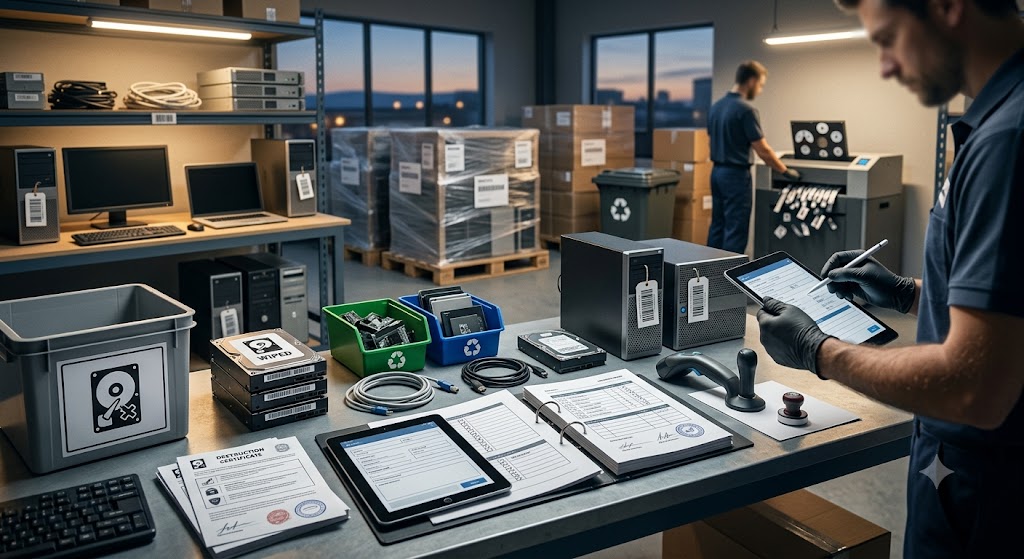
What Records Should Businesses Keep When Disposing…
08-20-2026
Australian businesses disposing of IT equipment must retain financial tax invoices, asset depreciation schedules, serialised Certificates of Data…