Lithium-Ion Battery Fire Hazards in the Workplace: Safe E-Waste Storage
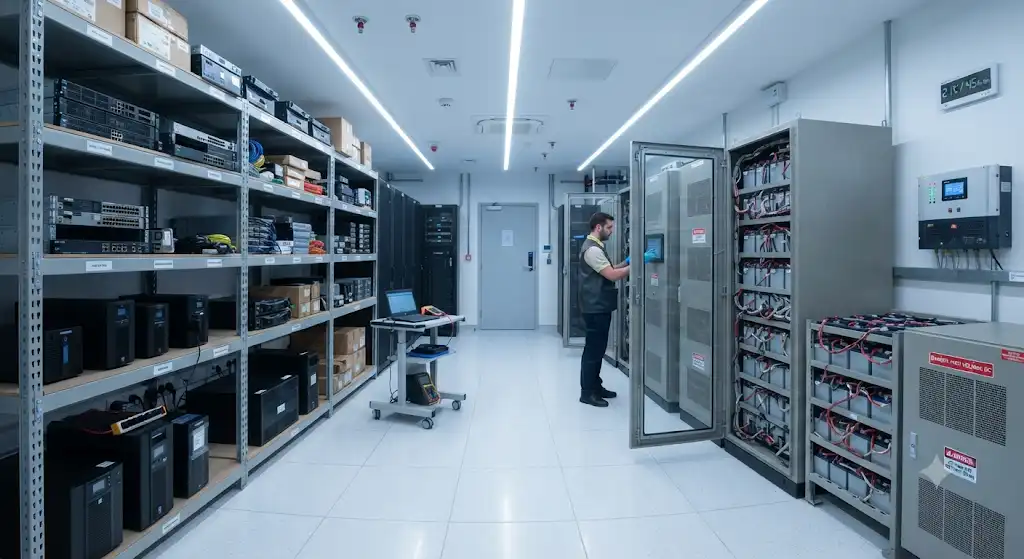
Lithium-ion battery fire hazards are highest when equipment is retired and placed in storage. Laptops, phones, power tools and scanners awaiting disposal lose the charging controls and monitoring that kept them safe in use, and are often already damaged.
This guide explains why stored batteries fail, the warning signs to watch for, and the WHS and dangerous goods obligations that apply in Australia.
It also sets out practical storage controls, the climate risks specific to Perth and Darwin, and a six-step risk assessment process.
Why Lithium-Ion Battery Fire Hazards Peak at End of Life
Retired batteries carry more risk than batteries in use, yet receive far less attention.
The scale of battery fires in Australia
Battery fires are already a daily occurrence in Australia. The Australian Council of Recycling estimates 10,000 to 12,000 battery-related fires occur nationally each year, many in waste trucks, recycling centres and landfills.
State data shows the number is rising quickly. Lithium-ion battery fires in New South Wales reached 285 in 2023, more than double the previous year (NSW EPA).
Large volumes of batteries are still reaching the waste stream. One Victorian transfer station removed 15,660 batteries from 40,000 tonnes of waste between August and December 2025 — about one battery per 2.5 tonnes.
Why stored batteries are higher risk
Storage removes every safeguard that protects a battery in use. In service, a battery has a managed charger, an active user and regular replacement. In a storeroom, it has none of these.
Retired equipment is often the equipment most likely to fail. Devices are commonly retired because they were dropped, overheated, swollen or water-damaged.
Storage then concentrates those batteries in one place. Retired devices are typically packed together in cardboard, in rooms with no detection, no ventilation and no assigned owner.
End-of-life storage should therefore be assessed as a separate risk area. Organisations should consider lithium-ion battery fire hazards at each lifecycle stage — in use, on charge, in storage and in transit — rather than treating storage as part of general office fire safety.
How Thermal Runaway Causes Battery Fires
Thermal runaway is the failure mechanism behind most lithium-ion battery fires.
Thermal runaway is a self-accelerating chemical reaction. Rising temperature speeds up reactions inside the cell, which generates more heat and speeds them up further.
The temperature rise can be extremely fast. Laboratory testing recorded lithium cobalt oxide cells entering thermal runaway at around 200°C, with temperatures rising at up to roughly 5,000°C per minute (Chalmers University).
One failing cell can ignite those around it. The heat released pushes adjacent cells past their own threshold, which is why a box of stored laptops can burn device by device.
Toxic gases and re-ignition
Failing cells release gas that is both flammable and toxic. Research found the vapour is around 30 to 50 per cent hydrogen, alongside carbon monoxide, carbon dioxide and hydrogen fluoride (Prof. Paul Christensen).
Battery fires can reignite after they appear to be out. Hydrogen fluoride is corrosive and highly toxic, and continuing thermal runaway can restart a fire hours or days later.
Retired batteries still hold charge
Treat every stored battery as charged. Most end-of-life lithium-ion batteries retain enough energy to fuel a short circuit or thermal event, even when the device no longer works.
Warning Signs of a Damaged Lithium-Ion Battery
Early detection is the simplest and cheapest control available.
NT WorkSafe identifies five warning signs of battery failure (NT WorkSafe):
- Heat — extremely hot to the touch.
- Swelling — any change in shape, bulging or leakage.
- Noise — hissing or cracking sounds.
- Odour — a strong or unusual smell.
- Smoke — a fire has already started.
The first four signs allow intervention; the fifth requires the emergency plan. Display these signs wherever batteries are stored or collected, not only at charging points.
Storage areas should be inspected on a fixed schedule. Weekly visual checks for swelling, heat, odour and damaged packaging are a sensible default, with a brief written record of each check.
Swollen laptop batteries
Swollen laptops are the most common damaged-battery risk in offices. Swelling is caused by gas building inside a degrading cell and often shows as a lifted trackpad, raised keyboard or case that will not close.
Never store a swollen device with undamaged equipment. Remove it from service, isolate it in a non-combustible container and arrange priority collection. IT teams usually see swelling first and should be included in the battery safety procedure.
WHS and Dangerous Goods Obligations in Australia
Battery storage is covered by WHS law, dangerous goods transport rules and, in Western Australia, e-waste regulations.
PCBU duties for lithium battery storage
PCBUs must manage battery storage risks so far as is reasonably practicable. This duty applies under the harmonised WHS model, including WA’s Work Health and Safety Act 2020 and the NT’s Work Health and Safety (National Uniform Legislation) Act 2011.
Risk assessments and safe work procedures are required. SafeWork NSW states that PCBUs must assess risks across the use, handling and storage of lithium-ion batteries, and develop procedures covering storage, charging, transport and disposal.
The duty extends to stored e-waste. A storeroom of retired devices remains a workplace hazard under the PCBU’s control.
Class 9 dangerous goods transport rules
Lithium-ion batteries are dangerous goods under the Australian Dangerous Goods Code.
Damaged or defective batteries have additional transport requirements. Special Provision 376 sets specific packing, marking and documentation rules (National Transport Commission), including the warning “DAMAGED/DEFECTIVE LITHIUM ION BATTERIES” on packaging.
Confirm your collection partner can meet these requirements before damaged batteries leave site.
WA e-waste landfill ban and AS 5377:2022
WA has banned regulated e-waste, including batteries, from landfill since 1 July 2024. The regulations refer to AS 5377:2022 Management of electrical and electronic equipment for re-use or recycling .
Storage requirements depend on the e-waste type and its end use, with AS 5377:2022 as the reference. For Perth businesses, this means more e-waste is held on site awaiting collection.
How to Store Lithium-Ion Batteries Safely at Work
Safe lithium battery storage in the workplace depends on five controls applied consistently.
Isolate terminals
Prevent terminals from touching each other or metal. Cover loose battery terminals with non-conductive tape or bag batteries individually. Leave embedded batteries inside their devices, as removal can damage the cell.
Segregate damaged batteries
Keep damaged batteries separate from undamaged ones at all times. Place them in a non-combustible container, ideally with sand or vermiculite. Handlers should wear gloves and eye protection.
Control temperature and location
Store batteries cool, dry and away from people and exits. NT WorkSafe advises storing within the manufacturer’s temperature range, away from flammable materials and out of direct sunlight.
Keep battery packs out of occupied areas. WorkSafe Victoria recommends storing them outdoors where appropriate, or in fire-resistant areas with working smoke alarms.
Use non-combustible containment
Containment determines whether one failure stays one failure. At minimum, batteries should be stored in a non-flammable container.
Lithium battery storage cabinets
Dedicated cabinets suit workplaces holding larger volumes. They are designed to contain a thermal event, and some models ventilate gases or detect heat.
Sprinkler limitations
Standard sprinklers may not control a large battery fire. WorkSafe Victoria advises seeking fire engineering advice and upgrading systems where batteries are stored in volume.
Limit storage volume and time
The most effective control is holding fewer batteries for less time. This applies the top level of the hierarchy of controls — elimination — to stored e-waste.
Set maximum volume and dwell-time limits. Trigger a collection when either is reached, so storage is a managed process rather than an open-ended liability.
E-Waste Storage Risks in Perth and Darwin
Heat is a primary risk factor for businesses in both cities.
Darwin
Darwin storage areas rarely cool down overnight. Bureau of Meteorology data for Darwin Airport shows a mean annual maximum of 32.1°C and a mean annual minimum of 23.3°C (Bureau of Meteorology).
Unconditioned sheds and containers can stay hot around the clock. Air-conditioned storage, shorter dwell times and frequent inspection should be standard controls. Cyber Recycling provides scheduled e-waste recycling in Darwin.
Perth
Perth combines summer heat peaks with higher on-site volumes. Metal sheds and sun-exposed loading docks are poor storage locations, and WA’s landfill ban means more e-waste is held awaiting collection. Cyber Recycling offers e-waste recycling in Perth.
Vehicles
Do not leave batteries in hot vehicles. NT WorkSafe issued an alert after a cordless impact wrench with its battery attached exploded in a work vehicle left over a weekend.
Lithium-Ion Battery Fire Risk Assessment: Six Steps
A documented risk assessment turns these controls into a repeatable process. Review it annually and after any incident or change in storage.
1. Map where batteries accumulate
Identify every storage location, including IT storerooms, maintenance cages, drawers, vehicles and “broken equipment” shelves.
2. Assess condition and quantity
Record volumes, damaged batteries, packaging and proximity to combustibles and exits at each location.
3. Apply the hierarchy of controls
Start with elimination through scheduled collection, then apply containment, temperature control, detection, signage and procedures.
4. Plan the emergency response
Instruct workers to evacuate and not fight battery fires. WorkSafe Victoria advises against workers attempting to extinguish lithium-ion battery fires. Plans should include monitoring for re-ignition.
5. Train the people who handle equipment
Train IT, facilities, cleaning and logistics staff on warning signs, segregation and emergency response. Include chargers in routine test and tag programs.
6. Schedule collection
Set a recurring collection schedule based on volume, time or the presence of damaged batteries. Managing this within IT asset lifecycle management keeps retired devices moving to certified e-waste recycling.
Conclusion
Lithium-ion battery fire hazards in the workplace are concentrated in storage, not just at charging points. Retired devices accumulate in unmonitored spaces, often damaged and packed together.
The required controls are clear. Isolate terminals, segregate damaged batteries, use non-combustible containment, control temperature and train staff.
Reducing volume and storage time delivers the greatest risk reduction. For Perth and Darwin businesses, heat and WA’s landfill ban make prompt collection especially important.
Cyber Recycling collects retired IT equipment from businesses across Perth and Darwin, with certified data deletion before recycling.
Schedule a collection or contact the team to set up a recurring service.
Lithium-Ion Battery Fire Hazards: FAQs
Why are stored lithium-ion batteries a fire risk?
Stored batteries usually retain charge and are often damaged. When packed together, one failing battery can trigger thermal runaway in others, without the monitoring and charging controls that operate during use.
How should we store damaged lithium-ion batteries at work?
Separate them from undamaged batteries immediately. Place them in a non-combustible container, ideally with sand or vermiculite, away from heat, people and exits, and arrange priority collection.
Should batteries be removed from retired laptops before storage?
Generally, no. Removing an embedded battery can damage the cell. Keep devices intact, but segregate any device with a swollen or damaged battery.
What WHS duties apply to lithium battery storage?
PCBUs must manage risks so far as is reasonably practicable. This includes risk assessments covering battery use, handling and storage, and procedures for storage, charging, transport and disposal.
Does WA’s e-waste landfill ban include batteries?
Yes. Since 1 July 2024, regulated e-waste including batteries cannot go to landfill in Western Australia. The regulations reference AS 5377:2022 for storage and handling.
Should workers try to put out a lithium-ion battery fire?
No. WorkSafe Victoria advises workers to evacuate by a suitable route and not attempt to extinguish the fire. Contact emergency services and monitor the area for re-ignition.
References
- NSW Environment Protection Authority — Embedded battery disposal trial
- NT WorkSafe — Safe use of lithium-ion batteries at home and in the workplace.
- WorkSafe Victoria — Lithium-ion battery fires safety alert.
- SafeWork NSW — Lithium-ion batteries and Transport of recalled Galaxy Note7 devices.
- National Transport Commission — ADG Code changes, editions 7.5 to 7.6.
- Government of Western Australia, DWER — E-waste to landfill ban and FAQs.
- Bureau of Meteorology — Climate statistics, Darwin Airport.
- Chalmers University of Technology — Lithium-ion battery abuse testing.
- Prof. Paul Christensen — Lithium-ion batteries in thermal runaway.
- National Waste & Recycling Association — Battery storage guidance.
- University of Southampton — Battery Storage and Disposal Reference Guide 2025.
 Copy Link
Other Blog

Data Protection Risks and How to Mitigate…
09-21-2026
How much data does your business have sitting on its systems right now? Think about customer details. Employee…
Secure Data Destruction: A Complete Guide for…
09-21-2026
Every business laptop, server, USB drive and phone that has ever held customer records or financial data becomes…
What Records Should Businesses Keep When Disposing…
08-20-2026
Australian businesses disposing of IT equipment must retain financial tax invoices, asset depreciation schedules, serialised Certificates of Data…