How to Manage Commercial E-Waste in WA: The Complete Business Compliance Guide
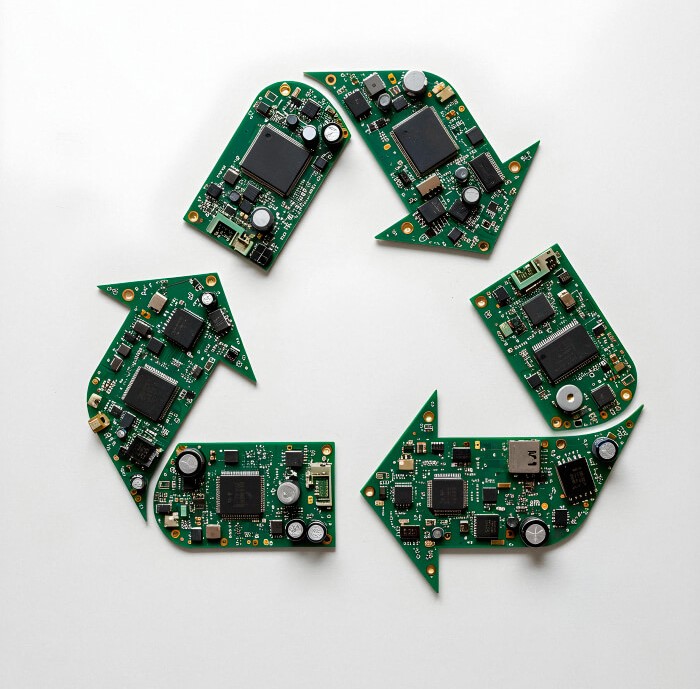
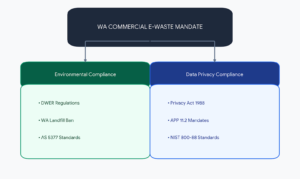
Under Western Australia’s Waste Avoidance and Resource Recovery (e-waste) Regulations, sending commercial e-waste to landfills is strictly illegal. WA businesses—particularly “Significant Entities” with 200+ employees or over 5 tonnes of annual e-waste—must implement compliant asset management. This requires verified data sanitisation under Privacy Act APP 11.2 / NIST 800-88 and chain-of-custody recycling adhering to AS 5377 standards.
Western Australia generates tens of thousands of tonnes of electrical and electronic waste every year. In response, state environmental authorities have shifted from voluntary recycling frameworks to mandatory regulatory enforcement.
For WA businesses, decommissioning corporate IT infrastructure, office electronics, or industrial electrical equipment is no longer just a facility management task. It is a dual-compliance mandate governed by state environmental protection acts and national data privacy laws. Disposing of e-waste improperly can lead to heavy regulatory surcharges, environmental penalties, and severe data breach exposure.
This guide details everything WA business owners, IT directors, facility managers, and ESG officers need to know to manage commercial e-waste legally, securely, and sustainably.
The Legal Framework: WA’s E-Waste Landfill Ban Explained
Western Australia’s e-waste regulatory framework is administered by the Department of Water and Environmental Regulation (DWER) under the Waste Avoidance and Resource Recovery (e-waste) Regulations.
The legislation established a total ban on disposing of regulated electronic waste into landfill across Western Australia. This rule applies to households, commercial enterprises, waste contractors, and local government authorities.
What Is a “Significant Entity” Under WA Law?
While the landfill ban applies to all organisations, the regulations place heightened reporting, auditing, and waste-tracking duties on larger commercial generators designated as Significant Entities.
Your business is classified as a Significant Entity in WA if it meets either of the following criteria in any financial year:
- Employs 200 or more full-time equivalent (FTE) employees, or
- Generates 5 or more tonnes of regulated e-waste within a 12-month period.
Significant Entities must maintain detailed disposal logs, ensure full chain-of-custody traceability, and produce verifiable audit documentation upon request by DWER inspectors.
Regulated Commercial E-Waste Categories (Schedule 1)
WA regulations broadly define regulated e-waste as any item that relies on electric currents or electromagnetic fields to function.
| E-Waste Category | Included Commercial Regulated Items | Current Exceptions / Phased Items |
| ICT & Telecommunications | Servers, rack switches, desktop PCs, laptops, monitors, mobile fleets, hard drives | Individual micro-components removed from boards |
| Temperature Exchange | Server room chillers, commercial air conditioners, refrigeration units | Non-electric cooling piping |
| Lighting & Electrical | Fluorescent tubes, commercial LED fittings, ballasts, control gear | Non-electrical lighting housings |
| Power & Storage | Uninterruptible Power Supply (UPS) units, lithium battery banks, lead-acid batteries | Non-rechargeable alkaline AA/AAA single units |
The Dual Risk: Environmental Laws vs Data Security Liabilities
Disposing of corporate IT hardware involves two distinct areas of legal liability: environmental compliance and information privacy. To properly protect your organisation during hardware retirement, it is critical to understand Data Protection Risks and How to Mitigate Them.
The Privacy Act 1988 (APP 11.2) & OAIC Penalties
Under the Commonwealth Privacy Act 1988, Australian Privacy Principle (APP 11.2) requires organisations to take active steps to destroy or de-identify personal information once it is no longer required.
When a business disposes of laptops, server drives, smartphones, or digital copiers:
- Leaving data on drives constitutes a breach under the Office of the Australian Information Commissioner (OAIC) Notifiable Data Breaches scheme.
- Corporate fines for serious or repeated privacy breaches can reach up to $50,000,000 or 30% of adjusted annual turnover.
- Financial institutions must also comply with strict media disposal controls under APRA CPS 234.
⚠️ Compliance Note: Standard formatting, deleting files, or resetting operating systems does not permanently sanitize enterprise drives. Data remains recoverable using basic software unless the media is sanitized using certified cryptographic erasure, magnetic degaussing, or physical shredding.
DWER Regulations 9 & 12: Anti-Degradation Rules
Under WA’s Waste Avoidance and Resource Recovery Regulations, businesses and collectors are legally prohibited from handling e-waste in a manner that degrades its potential for material recovery or recycling.
Throwing computers into general waste skips or crushing devices before processing violates these anti-degradation rules, exposing businesses to statutory enforcement fines.
Step-by-Step Commercial E-Waste Management Lifecycle
To maintain complete compliance with both state environmental laws and federal privacy acts, implement this 5-step asset disposition workflow:
Step 1: Audit & Log Your IT Assets
Compile a serialised asset manifest before moving or decommissioning hardware. Record:
- Device type, brand, and model number
- Asset tag and serial numbers
- Hard drive / solid-state drive (SSD) serial numbers
- Physical location and origin department
Step 2: Establish Secure Storage & Lithium Battery Protocols
Place retired hardware in lockable, access-controlled cages or bins to prevent unauthorized access or theft prior to collection.
When handling loose commercial batteries or UPS systems:
- Apply heavy-duty electrical tape over exposed battery terminals to eliminate short-circuit fire risks.
- Store lithium-ion battery units in cool, dry areas separate from flammable materials, adhering to the Australian Code for the Transport of Dangerous Goods by Road & Rail.
Step 3: Partner with an Accredited E-Waste Recycler
Select an IT Asset Disposition (ITAD) or commercial recycling vendor operating in Western Australia that adheres to AS 5377 (Management and transport of e-waste destined for reuse or recycling). Ensure the provider holds ISO 14001 (Environmental Management) and ISO 27001 (Information Security) accreditations.
Step 4: Execute Certified Data Sanitisation
Ensure all data-bearing assets undergo verifiable sanitisation matching NIST SP 800-88 Rev 1 standards. For a complete technical breakdown of wiping and physical destruction standards, explore our detailed guide on Data Destruction Methods for Businesses.
- Overwriting / Cryptographic Erasure: For drives targeted for remarketing or reuse.
- Physical Shredding: Mechanical destruction reducing storage media to small particle sizes (e.g., 2mm–12mm) for end-of-life drives.
Step 5: Retain Audit Documentation (Regulation 13 Compliance)
Archive all documentation generated during the disposal event to satisfy internal governance requirements and potential DWER compliance audits. If you need clarity on mandatory compliance paperwork, review our checklist on What Records Should Businesses Keep When Disposing of IT Equipment?
Corporate Sustainability & ESG Benefits for WA Businesses
Proper commercial e-waste management supports broader corporate governance and sustainability goals:
- Scope 3 Carbon Offset: Recycling circuit boards, copper, aluminium, and rare earth metals reduces the energy footprint compared to primary mining operations.
- Circular Economy Contribution: Extending the life of enterprise hardware through certified refurbishing reduces overall technological waste.
- Verifiable ESG Metrics: Documented diversion rates provide clear, audited metrics for sustainability reporting, investor disclosures, and corporate ESG frameworks.
B2B Vendor Vetting Checklist
Use this checklist when evaluating a commercial e-waste or ITAD service provider in Western Australia:
- AS 5377 Accreditation: Does the provider operate in full compliance with Australian e-waste standards?
- NIST 800-88 Compliance: Do their data destruction processes meet international data sanitisation benchmarks?
- Chain-of-Custody Tracking: Do they offer locked transport containers and tracked vehicles from pickup to processing?
- Itemised Certificates of Destruction: Will you receive destruction certificates listing drive serial numbers for audit protection?
- Local Processing Capabilities: Is the hardware processed in Western Australia in compliance with DWER regulations and Basel Convention export rules?
Frequently Asked Questions
Can my business drop commercial e-waste at local council transfer stations in Perth?
Local council transfer stations are designed primarily for residential drop-offs funded under the National Television and Computer Recycling Scheme (NTCRS). Commercial volumes—especially from Significant Entities—must be managed through licensed commercial providers to maintain chain-of-custody tracking and legal compliance.
What happens if e-waste is found in a commercial wheelie bin in WA?
Waste collection contractors inspect bin loads prior to disposal. Non-compliant bins containing e-waste are rejected, incur contamination fees, and can be reported to DWER under Regulation 9, potentially triggering regulatory audits and fines.
Are commercial solar panels covered under WA’s current e-waste ban?
Photovoltaic (PV) solar panels and utility-scale energy systems are managed under separate, evolving stewardship frameworks in WA. However, commercial battery storage systems, inverters, and electrical cabling fall under active e-waste management rules.
Manage Your Commercial E-Waste Compliantly in WA with Cyber Recycling
Ensuring your business complies with Western Australia’s e-waste landfill ban while protecting confidential enterprise data requires a trusted, certified partner.
At Cyber Recycling, we provide comprehensive commercial e-waste collection, recycling, and IT Asset Disposition (ITAD) services across Western Australia and the Perth metropolitan region. We help businesses, corporations, and government organisations meet their legal obligations under DWER regulations and national data privacy laws.
Our end-to-end commercial solutions include secure, lockable bin pickups, AS 5377-compliant recycling, and NIST 800-88 data destruction backed by itemised Certificates of Destruction. Whether you need to clear an office space, decommission server room infrastructure, or dispose of commercial electronics, Cyber Recycling delivers fully audited, eco-friendly processing across WA.
Ready to streamline your business’s e-waste compliance in Perth or Western Australia?
Contact Cyber Recycling Today for a Commercial Pickup & Compliance Audit
 Copy Link
Other Blog

Data Protection Risks and How to Mitigate…
09-21-2026
How much data does your business have sitting on its systems right now? Think about customer details. Employee…
Secure Data Destruction: A Complete Guide for…
09-21-2026
Every business laptop, server, USB drive and phone that has ever held customer records or financial data becomes…
What Records Should Businesses Keep When Disposing…
08-20-2026
Australian businesses disposing of IT equipment must retain financial tax invoices, asset depreciation schedules, serialised Certificates of Data…