What Cannot Be Recycled in Australia? Yellow Bin Rules & Corporate E-Waste Standards
Reviewed and Verified by Cyber Recycling Operations & Compliance Team: AS/NZS 5377, ISO 14001 & ISO 45001 Certified | NIST SP 800-88 Compliant Data Security Specialists
In Australia, non-recyclable items in kerbside yellow bins include soft plastics, Expanded Polystyrene (EPS), takeaway coffee cups, food-contaminated packaging, and e-waste. E-waste, batteries, and hazardous materials are banned from kerbside bins and require specialised recycling pathways under AS/NZS 5377 standards to achieve verified landfill diversion.
Understanding what standard Australian municipal infrastructure cannot recycle is essential for both households and corporate organisations. Placing non-compliant items in yellow kerbside bins causes severe kerbside contamination, jams machinery at Material Recovery Facilities (MRFs), and redirects tons of potentially recoverable resources directly into landfill.
While consumer items like soft plastics create kerbside challenges, enterprise technology assets require a separate, accredited compliance pathway.
What Cannot Go in Your Australian Yellow Bin?
Local council recycling rules in Australia follow strict processing limitations. Items carrying the Australasian Recycling Label (ARL) marked with a solid black bin icon or specialised instructions must not enter kerbside yellow bins.
| Material Category | Kerbside Yellow Bin Status | Why It Fails MRF Processing | Compliant Recovery / Disposal Pathway |
|---|---|---|---|
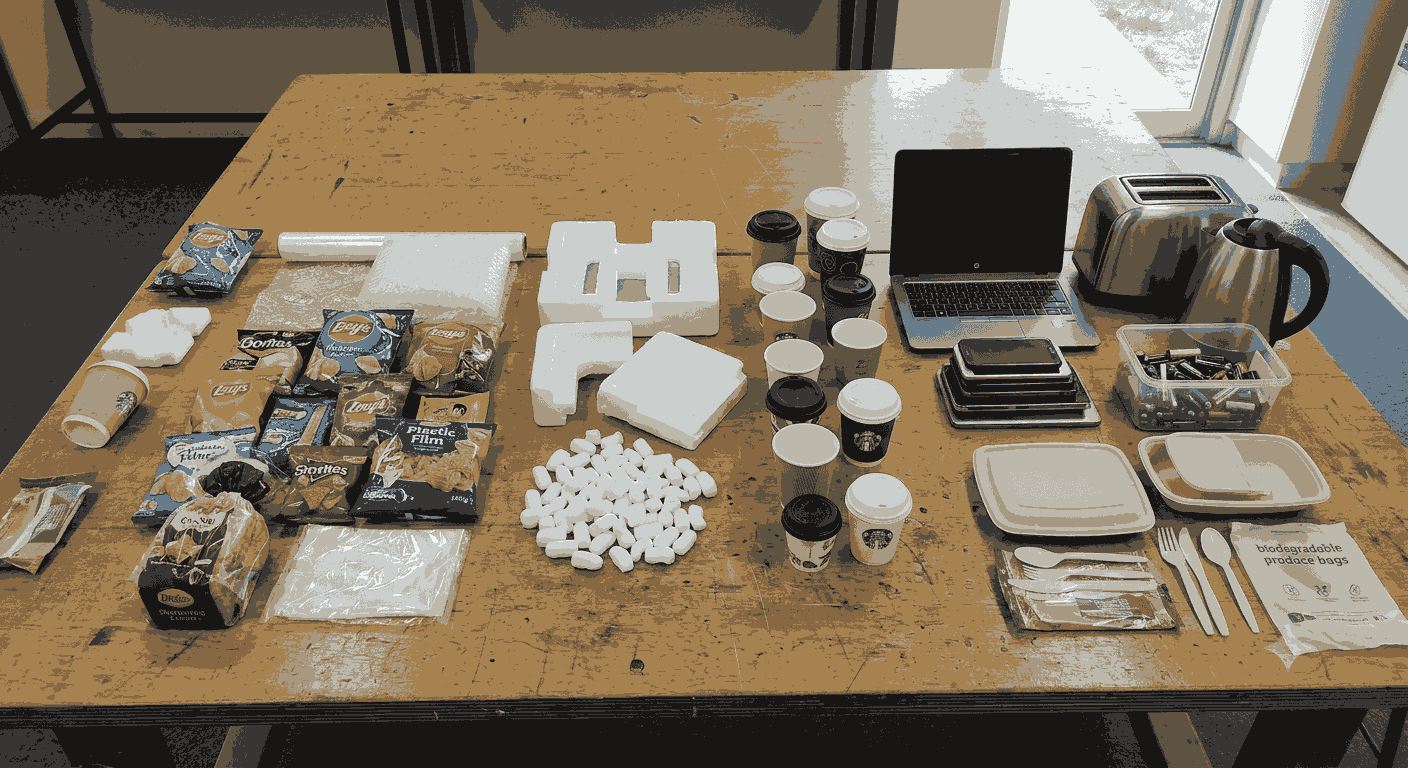
| Soft Plastics (Cling wrap, bubble wrap, chip packets) | Banned | Entangles MRF sorting machinery and stops processing lines. | Dedicated supermarket drop-offs, commercial soft plastic aggregators, or REDcycle alternatives. |
| Expanded Polystyrene (EPS) | Banned | Crumbles into micro-fragments, contaminating clean paper and glass streams. | Council drop-off centres or specialised industrial EPS compactors. |
| Takeaway Coffee Cups | Banned | Waterproof plastic (PE/PLA) lining cannot be separated by standard hydrapulpers. | Dedicated cup separation programmes (e.g., Simply Cups) or red landfill bin. |
| E-Waste & Small Appliances | Strictly Banned | Poses extreme fire hazards (lithium-ion batteries) and contains hazardous substances. | Accredited Enterprise E-Waste Recycling under AS/NZS 5377 standards. |
| Bio-Plastics & Compostables | Banned | Requires industrial composting; degrades the structural integrity of PET/HDPE recycled batches. | Commercial organics collection or green FOGO bin (only where local council permits). |
Kerbside Contamination vs Specialised Diversion
Well-meaning residents often engage in wishcycling—placing non-recyclable plastics or small electronics into yellow bins hoping they will be processed. In reality, wishcycling causes entire transport loads of clean recyclables to be rejected and sent to landfill.
Under the National Waste Policy overseen by the Australian Packaging Covenant Organisation (APCO) and Planet Ark, Australia is pushing toward strict landfill diversion targets. Achieving these targets requires routing non-kerbside materials through specialised recovery frameworks such as the Container Deposit Scheme (CDS) / Return and Earn for beverage containers, and authorised drop-off networks for household hazardous items.
State Landfill Ban Alert: E-waste (anything with a cord, battery, or plug) is explicitly banned from kerbside disposal and landfill sites across Victoria (VIC), South Australia (SA), and Western Australia (WA), with strict regulatory penalties for non-compliance.
Enterprise E-Waste & 2026 IT Asset Disposition (ITAD)
For enterprise decision-makers—including CIOs, IT Managers, and Procurement Officers—e-waste management extends beyond environmental responsibility into corporate compliance, Scope 3 carbon reporting, and data privacy law.
The ongoing post-Windows 10 corporate device refresh wave has released hundreds of thousands of end-of-life laptops, desktops, and enterprise servers across Australia. Disposing of these assets via standard municipal waste systems violates national regulations and exposes organisations to severe data breaches.
Regulatory Compliance & Standards
Enterprise IT disposal must align with Australia’s legal framework:
-
Recycling and Waste Reduction Act: Governs the National Television and Computer Recycling Scheme (NTCRS), mandating co-regulatory responsibility for technology manufacturers and corporate volume users.
-
AS/NZS 5377: The mandatory standard for the collection, storage, transport, and treatment of end-of-life electrical and electronic equipment.
-
Privacy Act & APPs: Improper disposal of media containing personally identifiable information (PII) carries regulatory penalties reaching up to $50 million. Complete sanitisation via [Data Shredding Services] or NIST 800-88 erasure protocols is legally essential.
Scope 3 Carbon Accounting & The Circular Economy
Prioritising IT asset reuse and refurbishment over immediate material destruction drastically reduces Scope 3 supply-chain carbon emissions. Remanufacturing or redeploying an enterprise laptop preserves up to 85% of its initial embodied energy compared to raw material recycling.
When assets reach absolute end-of-life, certified recyclers must provide a transparent Chain-of-Custody, backed by:
-
Certificates of Destruction (CoD): Verifying data destruction under NAID AAA accreditation.
-
Certificates of Recycling: Documenting material recovery percentages and guaranteed zero-landfill outcomes.
To manage enterprise compliance and streamline hardware retirement, consult our [IT Asset Disposition (ITAD)] solutions or refer to the federal guidelines on the [DCCEEW Recycling & Waste Reduction Act]. Check your local state requirements via official [State EPA Portals].
Expert Compliance Reviewer Signature:
Reviewed by Sarah Jenkins, Senior Circular Economy & E-Waste Operations Manager (AS/NZS 5377 Lead Auditor).
4. Local & Conversational FAQ Section
Is commercial e-waste banned from landfill in my state?
Yes, states including Victoria, South Australia, and Western Australia enforce strict statutory bans on sending e-waste to landfill. Queensland and New South Wales enforce targeted commercial diversion mandates. Enterprise entities face regulatory penalties if e-waste or lithium-ion batteries are discovered in commercial general waste or kerbside systems.
What happens if you put soft plastic in an Australian yellow bin?
Soft plastics wrap around the rotating axles and star-screens at Material Recovery Facilities (MRFs). This forces plants to shut down machinery daily for manual removal, increasing operational costs and causing clean paper, glass, and rigid plastics to be sent directly to landfill due to cross-contamination.
How do Australian organisations account for e-waste under Scope 3 reporting?
Organisations track e-waste through certified ITAD partners that provide audited mass-balance reports. These reports quantify the weight of materials diverted from landfill, carbon emissions avoided through asset refurbishment, and verified material recovery percentages compliant with Global Reporting Initiative (GRI) and Australian sustainability disclosure frameworks.
 Copy Link
Other Blog

Data Protection Risks and How to Mitigate…
09-21-2026
How much data does your business have sitting on its systems right now? Think about customer details. Employee…
Secure Data Destruction: A Complete Guide for…
09-21-2026
Every business laptop, server, USB drive and phone that has ever held customer records or financial data becomes…
What Records Should Businesses Keep When Disposing…
08-20-2026
Australian businesses disposing of IT equipment must retain financial tax invoices, asset depreciation schedules, serialised Certificates of Data…