How to Recycle E-Waste | Complete Guide
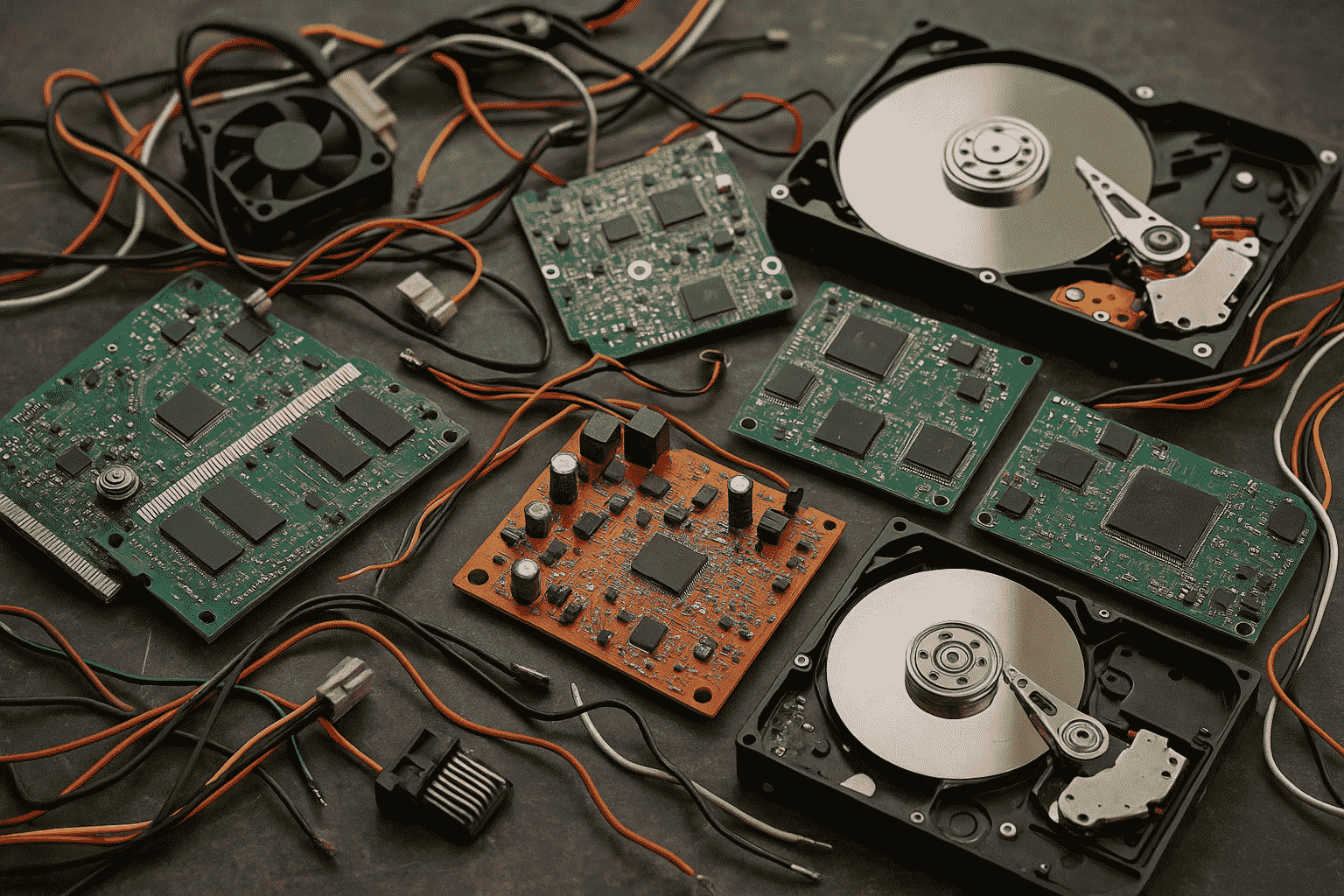
Electronic waste, or “e-waste” as they are commonly known, is growing rapidly worldwide and posing a threat to our environment. Each year, the number of discarded gadgets like phones, laptops, TVs, appliances, and more keeps rising. Most of these electronics contain toxins that are harmful to our environment. A record 62 million tonnes of e-waste were produced worldwide in 2022 alone. To put it in perspective, it is around roughly 40,000 km of 40-tonne trucks lined up end-to-end. Even worse than the volume is the fact that only roughly 22% of this e-waste was properly gathered and recycled.. As a result, precious metals worth around $62.5 billion per year sit idle in landfills, and the potential risk of toxic substances leaking is ever imminent. Here we will focus on what e-waste is and why recycling e-waste is important, how e-waste is processed, a step-by-step guide for consumers to Recycle E-Waste correctly, and offer tips on how to minimize e waste.
What Is E-Waste?
To start with, “E-waste” refers to any discarded electrical or electronic equipment once it’s no longer wanted or is functional. As you can guess, this often includes a vast range of items we use daily:
- Computers, laptops, and monitors
- Mobile phones and tablets
- Televisions and video equipment
- Printers, scanners, and game consoles
- Household appliances
- Office equipment
- Batteries and power adapters
- Lighting such as fluorescent tubes, LED bulbs
Many of these items contain hazardous substances, like lead, mercury, cadmium, and lithium. On the other hand, the risk of flame-retardant plastics emitting toxic compounds if burned. WHO notes that common e-waste items include computers, phones, large appliances, and medical equipment, and warns that unsafe recycling of e-waste can release up to 1,000 different chemical substances into the environment. In short, e-waste is nothing like regular trash, and the risk it poses needs more attention than it often receives. When left uncollected or mixed with household garbage, e-waste can become a health and environmental hazard.
Global E-Waste Generation and Recycling Trends
Per Capita E-Waste Generation
- Europe: At 17.6 kg per person, Europe produces the most e-waste on an individual basis, nearly triple the global average.
- Oceania: Residents discard about 16.1 kg each annually.
- Americas: North and South America generate roughly 14.1 kg per person per year.
- Asia: While Asia contributes nearly half of global e-waste in total mass (about 30 billion kg), its per-capita figure is just 6.4 kg.
- Africa: At the low end, Africa’s average is 2.5 kg per person.
Regional Recycling Disparities
- Europe: With a recycling rate of 42.8 percent (7.53 kg per person), Europe leads globally.
- Oceania: Achieves a similarly high 41.4 percent (6.66 kg per person).
- Americas: 30% of its e-waste volume (4.2 kg per person) is recycled.
- Asia: Only 11.8 percent (0.76 kg per person) is formally recovered.
- Africa: Struggles with just 0.7 percent recycled (0.018 kg per person).
Top E-Waste Generators by Volume
- China – 10,129 kt
- USA – 6,918 kt
- India – 3,230 kt
- Japan – 2,569 kt
- Brazil – 2,143 kt
Top E-Waste Generators Per Capita
- Norway – 26 kg
- United Kingdom – 23.9 kg
- Switzerland – 23.4 kg
- Denmark – 22.4 kg
- Australia – 21.7 kg
Recycling Gap
Rapid technological advances, shorter product life cycles, high consumer demand, and limited repair infrastructure have driven e-waste generation almost five times faster than formal recycling capacity. Informal or unsafe recycling methods, such as open burning and acid leaching, release toxic substances into local environments, posing health risks and contributing to pollution and greenhouse gas emissions.
By 2023, 81 countries had put in place specific legislation, regulations, or policies governing e-waste management, covering approximately 72 percent of the global population. Yet, while the legal framework exists in many regions, enforcement levels and treatment standards vary widely.
Why Recycling E-Waste Is Important
Prevent Pollution and Protect Health
Electronics contain toxins, and if these devices go into landfills or are burned without precautions, those toxins can leach into soil, water, and air. According to UN and WHO data, only about 22% of e-waste is really recycled. Proper recycling removes batteries and mercury-containing parts beforehand, preventing dangerous leaks. In instances of dumping mercury lamps and lead solder can lead to poisoning of groundwater. Recycling keeps these hazards out of the environment.
Conserve Valuable Resources
One aspect of e-waste that is often overlooked is how much value it hides. E-waste is a rich mine of materials. Approximately $62.5 billion worth of recoverable metals are found in discarded devices worldwide each year. Recovering metals from e-waste also uses far less energy than mining new ore, with studies stating that a tonne of smartphones contains about 100× more gold than a tonne of gold ore. By recycling, we capture copper, gold, silver, rare earths, and other valuable elements that can be reused. This reduces the need to extract resources from other places and cuts greenhouse emissions from mining and refining.
Economic Benefits
Better recycling is also economically smart. For instance, the UN estimates that raising global collection and recycling rates to 60% by 2030 could yield net benefits of $38 billion through recovered resources and avoided health costs. Only over one-third of the material value of e-waste is now recovered in Australia. In 2019 alone, Australians sent roughly $430 million worth of materials to landfills with their e-waste. Improving recycling could help make the most of that value instead.
Legal and Safety Reasons
Many countries now ban throwing electronics in the trash. In Australia, for example, a new law in Western Australia has banned all e-waste disposal in landfills. Federally, Australia’s National Television and Computer Recycling Scheme (NTCRS) already requires free take-back of TVs/computers, and by 2027, it has an 80% recycling target. New product stewardship rules are under development for small gadgets and solar panels. These policies are put in place because governments have started to wake up to the reality that uncontrolled ewaste disposal is a threat.
Reduce Climate Impact
Manufacturing electronics and disposing of waste both emit greenhouse gases. We can save energy by maintaining e-waste in a circular loop. For example, extending the life of electronics by one year is estimated to save massive CO₂ emissions. Every bit of material we recover helps reduce carbon emissions in the tech supply chain.
To sum it up, e waste recycling protects the environment, conserves scarce resources, supports public health, and even saves money in the long run.
How Does E-Waste Recycling Work?
Typically, most e-waste recycling facilities follow a multi-stage recycling process, which always begins with the collection and transportation of electronics. This e-waste is then sorted by type and dismantled. Employees remove the easily detachable parts and hazardous aspects of the gadgets, such as batteries, before moving into the next stage. Next, the devices or whatever hat is left of it are shredded into small fragments. During shredding, magnets and sensors sort the pieces. Magnetic separators pull out steel and iron, eddy-current systems eject aluminum, and optical sorters can identify different plastics.
Sorting and Dismantling
The items are first separated into categories. Hazardous components like circuit boards, batteries, or cathode-ray tubes are manually removed. Valuable modules like circuit boards, chips, and wiring harnesses are often extracted by hand during the process.
Shredding and Separation
After manual dismantling, machines grind whatever’s left. The shredded mixture goes through physical sorting with the help of magnets to extract ferrous metal, special grids or eddy currents sort non-ferrous, and air classifiers or float-sink tanks separate plastics and glass.
Recovery
The separated items are then processed in different methods based on the material. Metals like copper, iron, gold, silver, etc., are melted or refined and sent back to manufacturers. Plastics are cleaned and pelletized for reuse. Glass may be crushed for reuse. In fact, well-run recycling programs often recover over 90% of the original device weight. Any residues or non-recyclable remnants are disposed of while following strict environmental controls.
In short, recycled electronics are turned into raw materials again. Precious metals can re-enter the supply chain, plastics can be remolded, and toxic parts are dealt with safely. Proper facilities have pollution controls to capture fumes and prevent spills, making recycling far safer than burning or acid leaching.
Step-by-Step: How to Recycle E-Waste Properly
If you are someone looking to Recycle E-Waste safely and effectively, here is a guide to help you with it.
Sort and Prepare Your Devices
Gather all your unwanted electronics in one place. Identify any that still work, as these can often be reused or repurposed. Remove personal data from storage drives and phones by factory-resetting smartphones and securely erasing PC hard drives. If possible, donate or sell devices in working order. This could help someone in need of it while also reducing e-waste in the process.
Separate Batteries and Accessories
Take out loose batteries, especially lithium-ion or alkaline, and bring them to a battery recycling point. Many retailers and councils collect batteries separately. Also, remove any memory cards or SIM cards, and store cords/chargers together with their devices. Be careful while handling damaged screens or devices.
Find an Authorised Recycling Program
Check for e-waste recycling schemes in your area. Municipalities often have ewaste disposal events or drop-off centers. In many countries, electronics retailers accept returns. In Australia e waste recycling Australia efforts include free drop-off of old TVs and computers under the National TV & Computer Recycling Scheme.
Drop Off or Arrange Collection
Take your sorted e-waste to the designated center or event. Some areas offer scheduled pickups if you have many items. Make sure you know which items the program accepts. The staff at these centers will handle the rest. They will mark items for recycling and give you a receipt or certification if needed. One thing to keep in mind is to never dispose of e waste with your regular trash.
Record and Follow Up
For businesses or large volumes, it’s wise to keep proof of recycling, as some programs issue certificates. Over time, you can track how much you have recycled. You could also make sure whether the recycler follows best practices, which can be done by confirming they have certifications like e-Stewards or R2 on their website.
By following these steps, you can be confident that your electronics are entering the ewaste recycling stream correctly.
What Happens After You Recycle E-Waste?
Once you hand off your e-waste to a certified recycler, the company will process it as described above. In practice, large items often go through a preliminary dismantling phase. Workers might remove external panels, plug cables, or extract circuit boards manually to streamline processing. Then the bulk of the device is shredded. After shredding, specialized equipment sorts the fragments. Magnetic conveyors and eddy-current separators pull out metals, and optical or density-based systems separate plastics and glass.
The sorted output then goes to different recovery routes. Metals like copper from wiring, gold from circuit boards, and steel from chassis are melted down by smelters or refineries. These recovered metals can then be used to make new electronic components or other products. Recycled plastics and glass are cleaned and pelletized or crushed for reuse. In some cases, complex multi-material fragments or intractable glass are disposed of as hazardous waste under controlled conditions, or in some cases, sent for energy recovery.
If any devices are still in good condition, recyclers may also refurbish them. In many developing countries, formal refurbishing and repair businesses give used electronics a second life. But even in these cases, the priority is always to wipe data and guarantee the devices meet safety standards before reuse.
The “after” of e-waste recycling means turning your old gadgets into the building blocks for new ones. Precious metals re-enter supply chains and lessen pressure on mining. Plastics become new casings and parts. Even a few percent increase in recycling can make a big difference. By recycling properly, each of us helps close the loop on electronics and keeps toxins out of landfills and communities.
How to Minimise E-Waste
Preventing e-waste in the first place is just as important as recycling it. Here are practical ways to minimize e waste in your life
Repair and Reuse
When a device malfunctions, try to repair it instead of replacing it. Use warranty and repair services, or learn simple fixes. If possible, try to repurpose any old gadgets. An unused tablet can become an e-reader or smart home controller, and old smartphones can serve as cameras or music players. This extends the device’s life and keeps it out of the waste stream.
Buy Quality and Protect
When you do buy electronics, try to invest in durable, high-quality options. Cheaper devices often fail sooner. Use protective cases, screen guards, and surge protectors to prevent accidental damage. These measures can significantly reduce the chance of damage. Also, try to make sure that the products have good repairability and long warranties.
Choose Energy-Efficient or Modular
Opt for devices with good energy ratings and eco-design. Some modern devices allow you to upgrade or replace parts, like adding more RAM or storage, instead of buying a whole new unit.
Buy Refurbished
Consider certified refurbished or second-hand devices, which tend to be cheaper and keep products in use longer. Many retailers and manufacturers now sell refurbished models with a warranty. This is another way to get high-quality electronics without generating new waste.
Donate or Sell
If you really need to upgrade, first try to find your old working device a new home. Sell it online or donate it to charity, schools, or community groups. This can help others and delays the gadget’s journey to recycling, but do make sure you have wiped the data clean before handing them over.
Reduce Upgrades
Think twice about upgrading for marginal benefits. If your current phone or laptop still meets your needs, keep using it. Skipping one upgrade per year cuts your e-waste by some margin.
Recycle Accessories
Even small items count. Recycle old cables, chargers, and batteries properly. Many e-waste programs and retailers accept these as well.
You can play a crucial part in minimising e-waste by buying only what you truly need, and maintaining your electronics so they last longer. These habits of buying less, choosing better, and finding second uses all help minimise e waste. In the end, simply keeping devices an extra year alone would drastically cut emissions and waste.
Conclusion
E-waste is a global challenge that needs to be addressed sooner than we think. By recycling e-waste correctly and reducing our consumption, we protect the environment and reclaim valuable resources. Remember, do not dump electronics in the trash; always use dedicated e-waste programs or ewaste disposal provider. Follow the steps above to find local drop-off points or take-back schemes, and educate friends and family to do the same. Especially in places like Australia, where new laws are tightening.
Every gadget you recycle can supply metals for new tech instead of pollution. When you consider that only about one-fifth of all e-waste is recycled globally, imagine the difference if everyone did their part. By extending device lifetimes and supporting recycling programs, we help move toward a circular economy.
Recycle the electronics you no longer need and make better choices to minimise e waste. In this way, we can all help reduce the growing e-waste mountain, protect health and the environment, and turn discarded tech into resources for the future.
 Copy Link
Other Blog
Top 10 Places to Get Cash for…
01-19-2026
Upgrading your smartphone is exciting—but knowing what to do with your old phone can be confusing. Many Australians…
Why Perth Businesses Must Prioritize Test and…
10-14-2025
Every Perth business uses plug-in devices daily, from office computers to power tools and kitchen appliances. But even…
Why Secure Data Disposal Matters in Australia
10-07-2025
Electronic devices are omnipresent in modern business, from laptops and servers to phones and IoT equipment. Eventually, every…