How Solar Panel Recycling Supports a Circular Economy
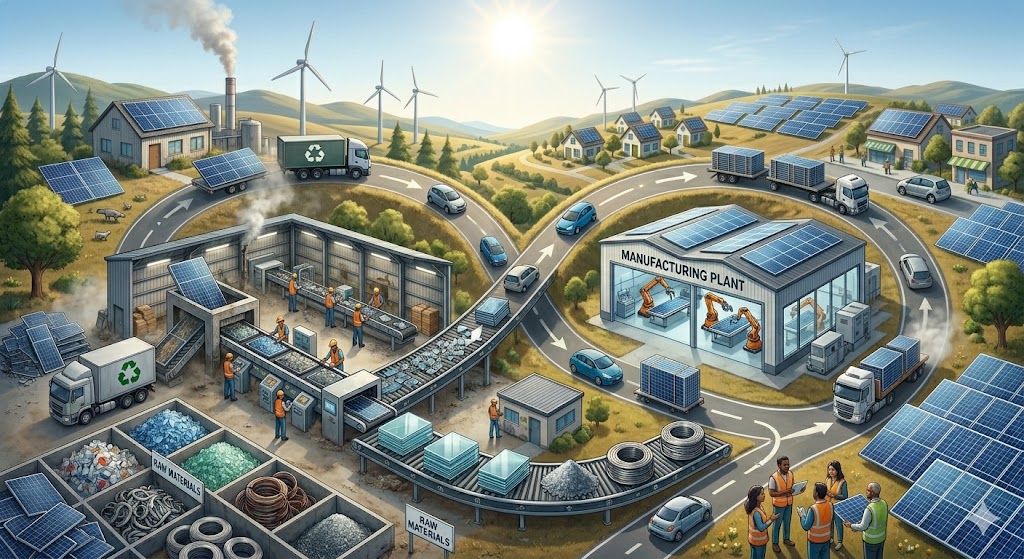
Solar energy is helping Australia move towards a cleaner future. However, as solar panels reach the end of their lifespan, proper disposal becomes important. Solar panel recycling supports a circular economy by recovering valuable materials and reducing waste.
At Cyber Recycling, we help businesses and organisations manage end-of-life solar panels through responsible recycling solutions across Australia.
What Is a Circular Economy?
A circular economy keeps materials in use for as long as possible.
Instead of making products, using them, and throwing them away, a circular economy focuses on reusing, repairing, refurbishing, and recycling materials. The goal is to reduce waste and make better use of natural resources.
Solar panel recycling is a key part of this process.
Why Solar Panel Recycling Matters
Solar panel recycling prevents valuable materials from ending up in landfills.
Most solar panels contain materials such as:
- Glass
- Aluminium
- Silicon
- Copper
- Silver
Many of these materials can be recovered and used again in new products. This reduces the need for raw material extraction and lowers environmental impact.
As more solar systems are installed across Australia, the volume of end-of-life solar panels will continue to grow. Recycling helps manage this waste responsibly.
How Solar Panel Recycling Supports a Circular Economy
Solar panel recycling supports a circular economy by returning valuable materials to the supply chain.
Instead of being discarded, materials recovered from old solar panels can be processed and reused in manufacturing. This creates a closed-loop system where resources remain in circulation for longer.
The result is less waste, lower resource consumption, and improved sustainability.
Reduces Landfill Waste
Solar panel recycling reduces the amount of waste sent to landfills.
Although solar panels are designed to last for decades, they eventually reach the end of their useful life. Without recycling, large quantities of panels could create a significant waste challenge.
Recycling helps divert these materials from landfills and supports better waste management practices.
Conserves Natural Resources
Solar panel recycling helps conserve valuable natural resources.
Recovering materials such as aluminium, copper, and glass means fewer raw materials need to be mined or manufactured. This reduces pressure on natural ecosystems and lowers resource depletion.
Resource recovery is one of the core principles of a circular economy.
Reduces Environmental Impact
Solar panel recycling reduces environmental impact by minimising waste and supporting material recovery.
Manufacturing new materials often requires significant energy and resources. Reusing recovered materials can help reduce energy consumption and greenhouse gas emissions.
This contributes to a more sustainable and environmentally responsible future.
Supports Sustainable Business Practices
Solar panel recycling helps businesses achieve their sustainability goals.
Many organisations are now focused on environmental compliance, waste reduction, and ESG commitments. Responsible solar panel disposal demonstrates a commitment to sustainable resource management.
It also helps businesses align with Australia’s growing focus on circular economy initiatives.
Why Choose Cyber Recycling for Solar Panel Recycling?
Cyber Recycling provides environmentally responsible solar panel recycling services across Australia.
Our team focuses on:
- Safe collection and handling
- Responsible recycling processes
- Resource recovery
- Environmental compliance
- Sustainable waste management solutions
We help businesses ensure end-of-life solar panels are managed responsibly while supporting circular economy objectives.
Looking for Solar Panel Recycling Services?
Contact Cyber Recycling today to learn more about our solar panel recycling solutions and how we can help your organisation support a circular economy.
 Copy Link
Other Blog
Penalties for Illegal E-Waste Dumping in Australia
06-22-2026
Electronic waste is one of Australia’s fastest-growing waste streams. Every year, thousands of tonnes of old computers, laptops,…
What is the NTCRS, and What Does…
06-15-2026
Electronic waste (e-waste) is one of the fastest-growing waste streams in Australia. As more households and businesses upgrade…
Extended Producer Responsibility in Australia: What Manufacturers…
06-09-2026
Extended Producer Responsibility (EPR) is a policy approach that makes manufacturers, importers, and brand owners responsible for the…